

Developer-controlled wallets support signing on NEAR and other EVM chains.
User-controlled wallets support signing on other EVM chains.
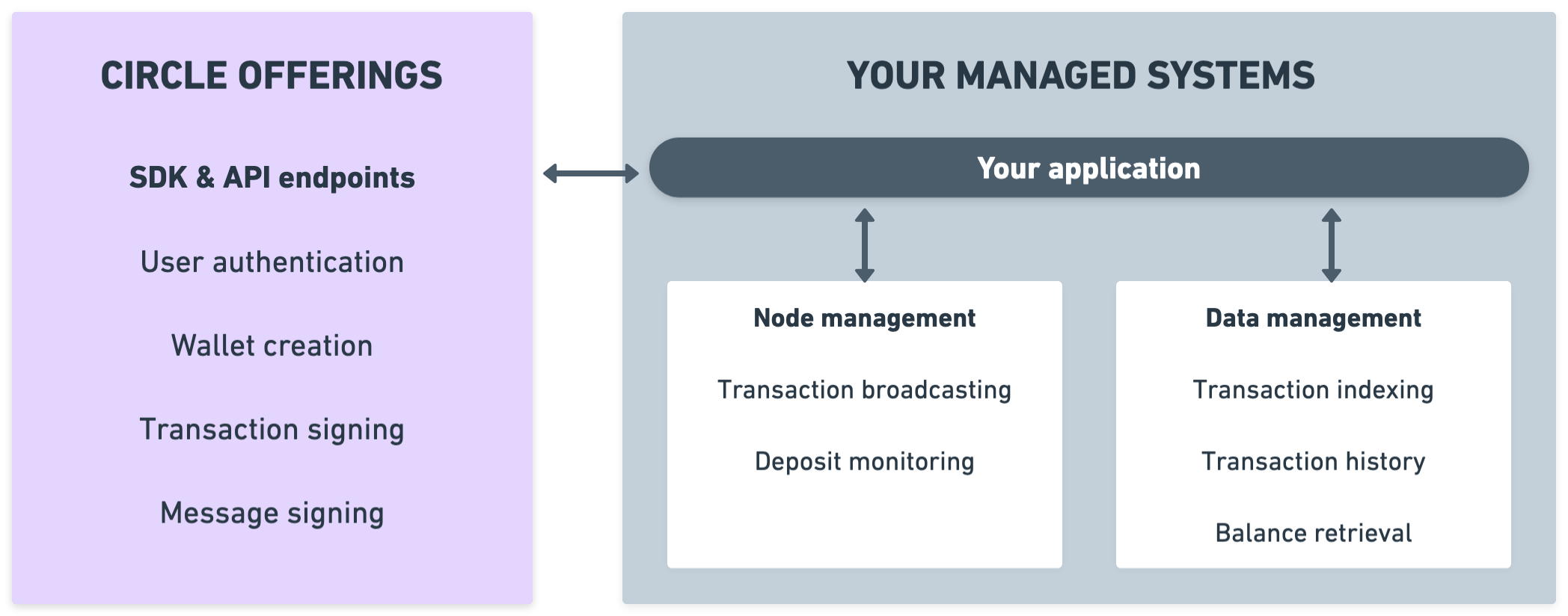
Signing endpoints
You can use the following API endpoints for signing capabilities such as sign transaction, sign typed data, or sign message.POST/developer/sign/messagePOST/developer/sign/typedDataPOST/developer/sign/transactionPOST/developer/sign/delegateActionPOST/user/walletsPOST/user/sign/messagePOST/user/sign/typedDataPOST/user/sign/transaction
For unsupported EVM chains, create a wallet with a
blockchain value of EVM
or EVM-TESTNET for signing. These virtual blockchain parameters are not tied
to specific EVM chains. For details, see
Sign transactions on EVM chains.For EVM-TESTNET wallets, you can sign transactions on the blockchains listed
in Chain IDs for signing transactions. Once you
transition to mainnet, you can use your EVM wallet to sign transactions on
any EVM-compatible chains.Disclaimer
Using the sign transaction endpoints involves critical actions that can impact your assets and transactions. Signing transactions carries inherent security risks. Malicious actors can trick users into signing what appears to be a legitimate transaction message. This could potentially allow them to gain unauthorized access to your funds. Always ensure that you are signing transactions only from trusted sources and verify the legitimacy of transaction requests before proceeding.If you have created Wallets on an EVM-compatible chain such as Ethereum,
Polygon, Avalanche, or Arbitrum, an EVM wallet created under the same wallet
set maps to the same addresses.In these cases, it is extremely important that you do not use the EVM wallet to
sign transactions for existing Wallets on those chains; for example, sign
transaction with chainID = 137 signs MATIC transaction.Your Wallet transactions will be stuck and you are responsible for any resulting
consequences.